


Free Samples Available
Qualified projects can receive free product samples
Qualified projects can receive free product samples
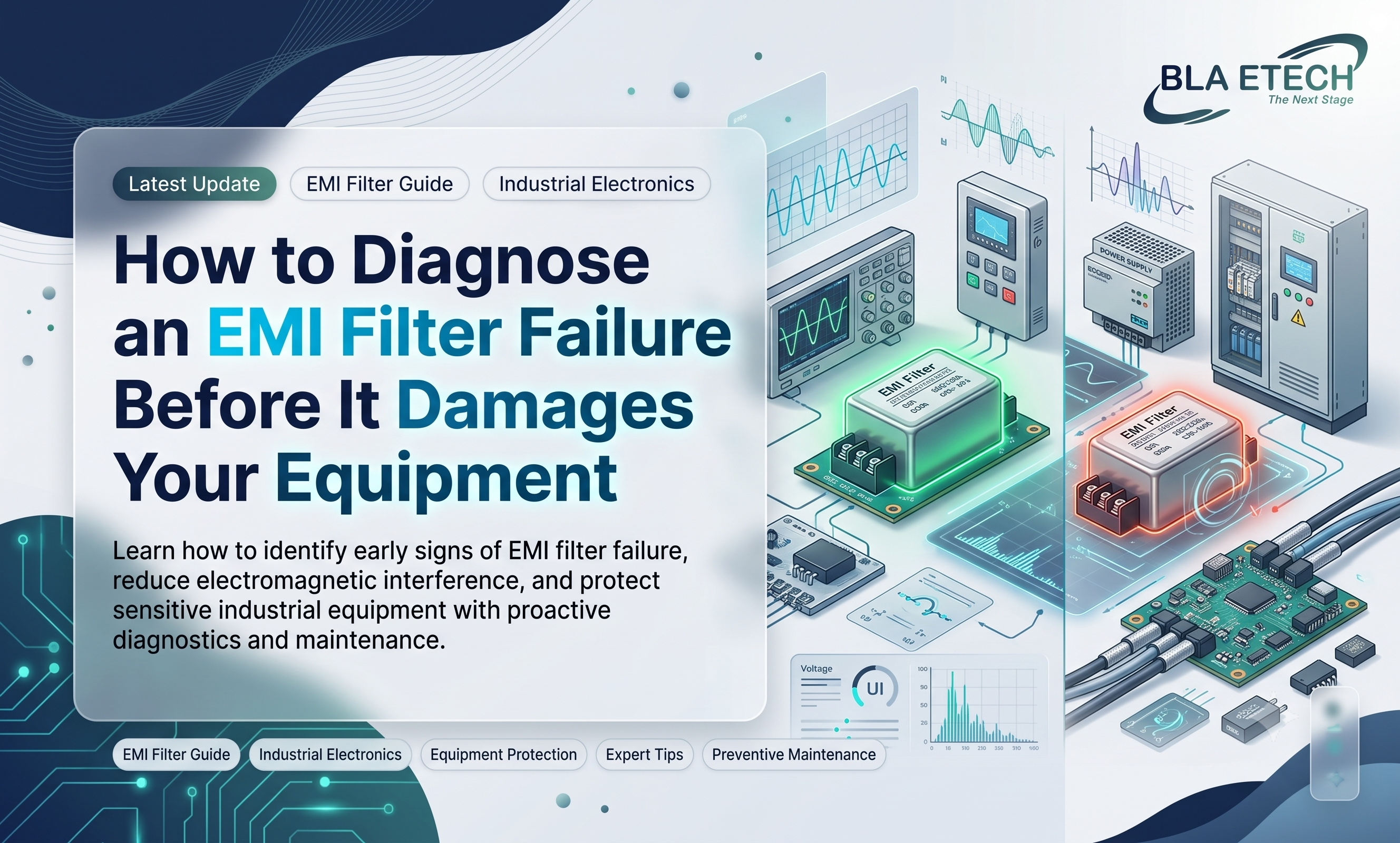
EMI filter is one of those parts that are likely to be forgotten after it's placed in. It's a quiet component within the power line and performs its function without generating any visible output, and seldom requires any attention. However, the issue with invisibleness is that when the EMI filter begins to malfunction, it occurs slowly and quietly, all the way until the effects become expensive.
The equipment that is causing unprovoked noise, or control systems that exhibit irregular behavior, or compliance tests that show unexpected results, are all indications that something is wrong with the chain of power filters. Professionals who are aware of what they should be looking for will spot the problem with a malfunctioning EMI filter weeks before it can cause damage downstream. The ones who fail to spot the issue until something else is failing.
This article will discuss the common symptoms of deterioration in the filter as well as the best way to determine failure, and the alternatives should be based upon.
To determine if a filter is failing, it is important to know how filters fail initially. An effective EMI filter is designed to last for a specific period of time. However, there are a variety of conditions that cause wear that is beyond what the manufacturer can anticipate.
The transient and high-voltage spikes put stress on the X-capacitors as well as Y-capacitors within the filter. As time passes, the repeated exposure decreases their capacitance and also increases the current leakage. In the industrial environment in which voltage fluctuations are frequent, the degradation may occur much earlier than the duration of the service.
Stress caused by heat is also destructive. Filters in enclosures that do not have sufficient ventilation will run warmer than what they are designed to. The heat accelerates the degradation of dielectric materials inside, specifically in capacitors, and also degrades the magnetic properties of the inductors. If a filter is operating 20 degrees higher than its recommended operating temperature could be unable to sustain its service for years.
The presence of moisture and contaminants, especially when working in factory or outdoor environments, could weaken the insulation and lead to partial discharge of capacitors. It is among the more difficult failure types to determine without precise tests.
The challenge in diagnosing EMI filter failure is that a large portion of the initial indicators look different from one another.
The increased electromagnetic interference that is visible in the vicinity of sensitive equipment can be due to an entirely new piece of equipment or to a shift in the load condition. An examination may show that the filter used on the current power line is not absorbing the electromagnetic interference in the way that it was originally designed to.
The unintentional tripping of the residual current devices, or the earth leakage circuit breakers, is another indication that is frequently wrongly diagnosed. A degraded Y capacitor increases the leakage of currents into earth. Since capacitance decreases with the passage of time or temperature and thermal stress, leakage current increases and may trigger protection devices, even if no problem exists with the device.
The heating of the housing for the filter as a whole is an obvious sign. The filter that is running significantly warmer than it did at the time of initial installation is probably operating closer to its rating today than was originally intended, or its internal components are losing greater energy as a result of degrading.
Examining a suspicious EMI filter does not require specialized equipment, other than the ones many maintenance teams already are able to access.
Step one: Visual inspection
The filter should be removed from service and checked out under proper light. The discoloration, especially in the vicinity of capacitors, can be a sign of thermal stress. Cracks that are physical in the housing, indicators of water ingress,s or the appearance of corrosion on the connectors should be given immediate attention.
Step two: Leakage current measurement
The filtering run is run and hooked up to its normal load, and measurements of the leakage current from earth are taken with the appropriate leakage current gauge. The reading should be compared to the rated leakage number in the datasheet. Any increase between 20 and 30% over the rating value can be a sign of warning. If the value is more than that of the figure that is rated, indicate that the filter needs to be taken out of service.
Step three: Capacitance and dissipation factor testing
After the filter has been de-energized and disconnected, utilize an LCR gauge to verify the capacitors X and Y with respect to their nominal values. A capacitor that is significantly degraded from what it was originally, or the readings for dissipation factors which have increased, indicate that the internal condition has deteriorated.
Step four: Insertion loss verification
If the facility you are working at can access an analyser for spectrum or controlled emissions test set-up, then you can compare the filter's loss in insertion to its original datasheet curve, which will provide the best way to determine whether the attenuation efficiency has decreased. Filters that aren't producing the levels it was designed to be at are functionally damaged even though it seems physically healthy.
The majority of filters do not need urgent replacement. The choice is contingent on what the filter protects and the gap between its current leakage rate and the level of protection downstream, and the consequences for a malfunction in the application in question.
In the case of medical equipment, safety-critical control systems, or in environments that have stringent requirements to comply with emissions regulations, any significant decrease in performance must trigger replacement. The expense of replacing an air filter is not significant when compared with the expense of compliance issues or damage to the equipment.
For machinery used in industrial applications that are more tolerant environments, filters that show an early stage of change in capacitance but are in compliance with the requirements for insertion loss may be able to continue in operation by re-inspecting them less frequently, possibly quarterly, rather than every year, until the measurements show it has passed the threshold for replacement.
One thing that should not be considered in the final decision is how long it was installed for. The age of the filter is an indicator. The measured performance is the real measure that counts.
EMI filter failure is easily diagnosed and reversible using the correct strategy. The professionals who are able to avoid expensive costs resulting from downstream effects will be those who approach the inspection of filters as a planned maintenance process as opposed to a reactive task that is able to determine the right measurements to use and what they mean.
BLA Etech designs and produces EMI filters that are designed to last an extended service life across demanding electrical and industrial applications. If your company is looking to evaluate filters' performance, or is experiencing unresolved leakage current or interference issues, BLA Etech can assist with technical issues for diagnosis as well as replacement specifications. Making sure the selection of filters is correct the first time, and from an industry expert who knows the specifics of your application, will always be less expensive in comparison to diagnosing the issue once the damage has already been caused.


